

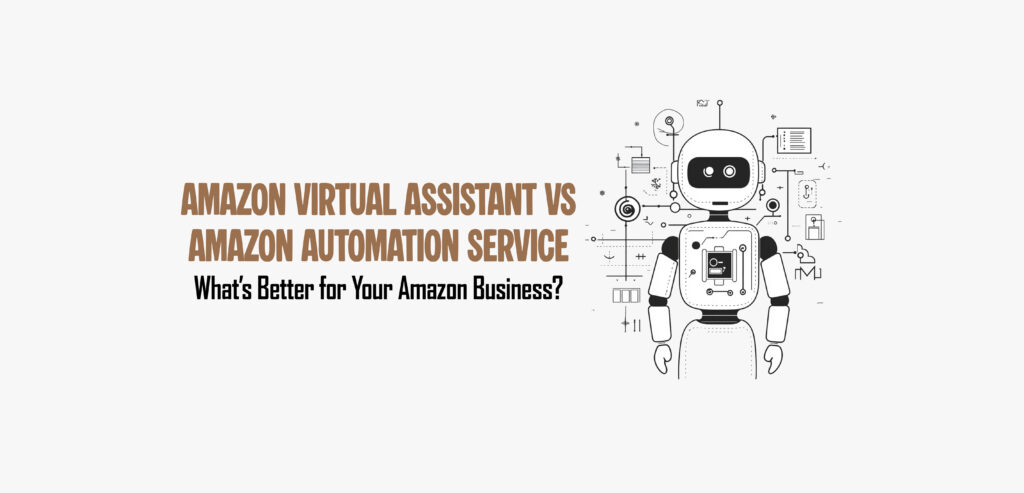
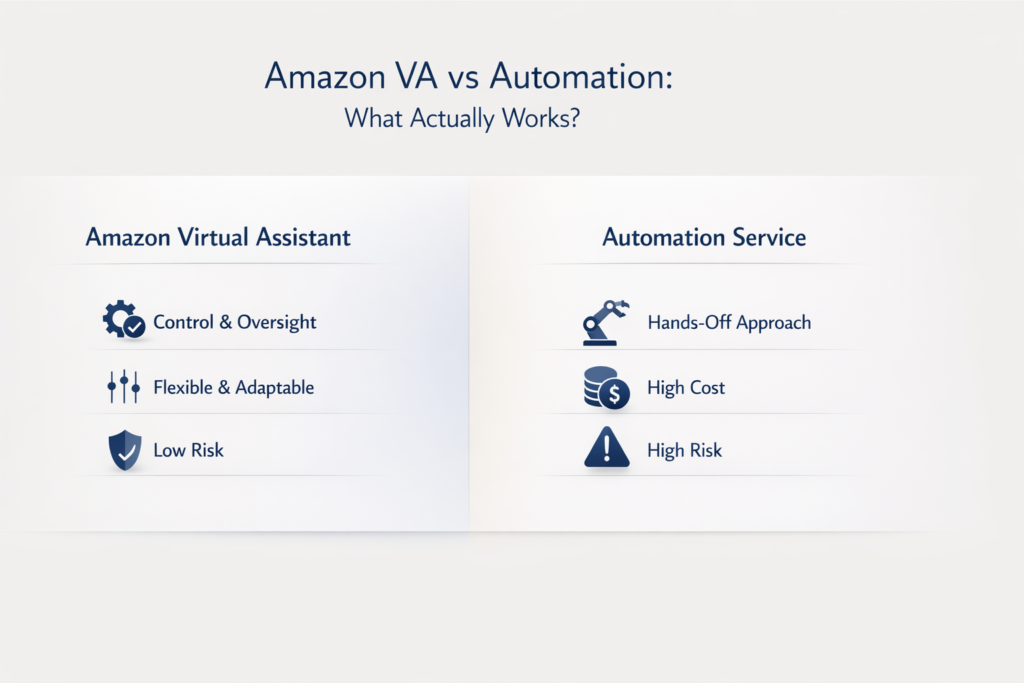
If you want full control, lower costs, and flexibility, hiring an Amazon Virtual Assistant (VA) is usually the smarter choice.
If you prefer a hands-off, done-for-you model and have a higher budget to invest, an Amazon Automation Service might be suitable, but it comes with a higher risk.
But here’s the thing most blogs won’t tell you:
- This decision is not just about cost or convenience.
- It directly impacts how your Amazon business grows, scales, and survives.
Many sellers don’t fail because of bad products; they fail because they chose the wrong operating model from day one.
So instead of giving you a surface-level comparison, this guide will help you actually understand what you’re getting into, so you don’t regret your decision later.
What Is an Amazon Virtual Assistant?
An Amazon Virtual Assistant is a remote professional who supports your Amazon business by handling operational tasks while you remain in control of decisions.
Now let’s make this practical.
Imagine you’re running an Amazon store alone. You’re:
- Managing listings
- Replying to customers
- Tracking inventory
- Running ads
- Checking competitors
Within a few weeks, it becomes overwhelming.
This is where a VA comes in, not to replace you, but to remove the workload that slows you down.
What does an Amazon Virtual Assistant do?
An experienced Amazon VA typically handles:
- Product listing creation and optimization (titles, bullets, keywords)
- Keyword research to improve Amazon SEO rankings
- Inventory tracking to avoid stockouts or overstocking
- Order processing and returns management
- Customer support (messages, feedback, disputes)
- Competitor research and pricing analysis
- Assisting with Amazon PPC campaigns
In simple terms, they manage the daily operations that directly affect your sales and rankings.
Why do sellers hire Amazon VAs?
Because doing everything yourself is not scalable.
Here’s what actually happens in real scenarios:
- Sellers spend 70% of their time on repetitive tasks
- Growth activities like product research and expansion get ignored
- Burnout leads to inconsistency
According to industry trends:
- More than 60% of Amazon sellers outsource at least one task
- Businesses that delegate effectively often grow 30–50% faster
That’s not because VAs are magical; it’s because focus shifts from survival to growth.
Benefits of hiring an Amazon Virtual Assistant
- Cost-effective compared to agencies or automation services
- You maintain full control over your business decisions
- Flexible hiring based on workload (part-time/full-time)
- Easy to scale by building a small team of VAs
- Better visibility into daily operations
Think of it like building a team slowly, instead of handing your business over completely.
What Is an Amazon Automation Service?
An Amazon Automation Service is a done-for-you model where an agency sets up and manages your Amazon business on your behalf.
This model is heavily marketed as:
- Passive income from Amazon
- We run your store while you relax
And honestly, that’s why many beginners get attracted to it.
How does Amazon automation service work?
Most automation agencies follow a structured approach:
- They create or optimize your Amazon seller account
- Identify products they believe will sell
- Source products from suppliers
- Handle logistics and fulfillment
- Manage listings, pricing, and ads
- Take care of customer support
On paper, it sounds like a complete business solution.
But here’s the reality most people ignore
- You are still the legal owner of the account
- If there is a policy violation or suspension, you face the consequences
- You have limited visibility into day-to-day decisions
- Profitability depends entirely on the agency’s execution
And this is where things become risky.
Market Insight: What Most People Don’t Realise About Amazon Automation Services
Amazon automation services require a high upfront investment, ongoing costs, and time to become profitable, and despite how they’re marketed, they are not truly passive income.
Let’s break this down realistically.
Most Amazon automation agencies in the US charge anywhere from $5,000 to $30,000+ upfront just to get started. And that’s only the entry cost.
On top of that, you’ll still need to cover:
- Inventory investment (products you’ll sell)
- Advertising spend to generate traffic and sales
- Ongoing management or service fees
When you add everything up, the total investment can easily reach $12,000 to $50,000+, depending on how aggressively the store is scaled.
Now here’s what most people don’t expect:
Even after investing this much, most stores take 3 to 6 months (or longer) to become stable and start generating consistent returns.
Why?
Because the US Amazon marketplace is highly competitive. Products don’t just “take off.” They need:
- Strong positioning
- Reviews and social proof
- Continuous ad optimization
- Ongoing testing and adjustments
So instead of thinking of automation as passive income, it’s more accurate to think of it as:
A business where execution is outsourced, but the financial risk is still yours
And that’s a critical distinction many sellers overlook early on.
Key Differences Between Amazon VA and Automation Services
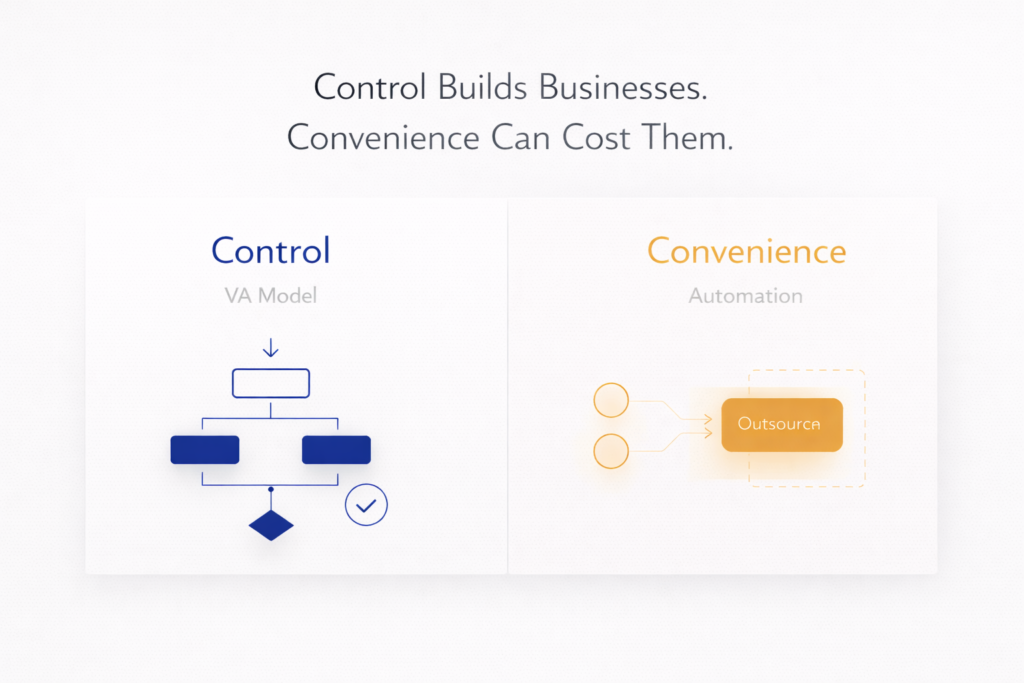
The real difference comes down to this:
With a VA, you’re building and controlling your business
With automation, you’re trusting someone else to build it for you
And in the US market, where competition is high, that difference matters more than most people realize.
1. Control vs Hands-Off Convenience
When you hire an Amazon VA, you stay in control of the key decisions.
You decide:
- What products to sell
- How to price them
- What strategy to follow
Your VA supports execution; they don’t replace your role.
With automation services, it’s the opposite:
- The agency selects products
- They set pricing strategies
- They manage campaigns based on their system
At first, this sounds convenient. But here’s where many sellers run into problems.
When performance drops, for example:
- Sales slow down
- Ads aren’t converting
- Account issues come up
You may not have enough visibility or control to fix things quickly.
And in a competitive marketplace like the US, delays in fixing problems can directly impact profitability.
2. Cost Difference (And Why It Impacts Risk)
On the surface:
- A VA is a monthly operational cost
- Automation is a large upfront investment
But the real difference is in how risk is distributed.
With a VA:
- You can start small
- Test products and strategies
- Scale spending based on results
With automation:
- You commit a large amount upfront
- You’re relying on the agency before validating results
This makes automation significantly riskier for beginners, especially in the US, where competition and ad costs are higher.
3. Risk Level (Where Most Sellers Get Burned)
Both models can work, but the risk profile is very different.
With a VA:
- You’re involved in the process
- You can catch issues early
- You can pivot quickly
With automation:
- You depend on the agency’s execution
- Problems may not be visible immediately
- Fixing issues can take time
Common risks sellers face with automation services include:
- Poor product selection in saturated niches
- High ad spend with low return on ad spend (ROAS)
- Account health issues due to policy violations
And because the investment is higher, mistakes tend to be more expensive.
4. Flexibility and Adaptability
Amazon is constantly changing, especially in the US market.
What works today may stop working in a few weeks due to:
- Competition
- Pricing shifts
- Algorithm changes
With a VA:
- You can quickly adjust the strategy
- Test new products
- Optimize listings and pricing in real time
With automation:
- Most agencies follow fixed systems
- Custom changes can be slower or limited
In a fast-moving marketplace, flexibility is not optional; it’s essential.
Cost Comparison: Amazon VA vs Automation Service
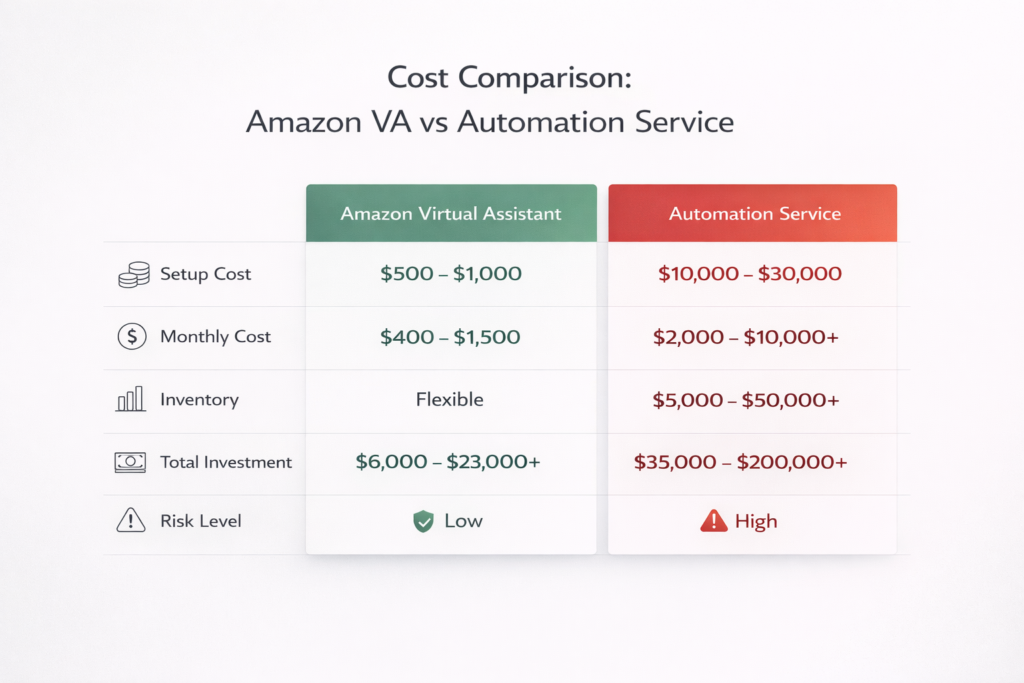
Amazon VAs are a flexible, scalable expense, while automation services require a significant upfront financial commitment.
Amazon VA vs Automation Cost Breakdown (US Market)
| Cost Factor | Amazon Virtual Assistant (VA) | Amazon Automation Service |
| Initial Setup Cost | $0 – $500 (hiring/onboarding) | $5,000 – $30,000+ |
| Monthly Cost | $200 – $1,500 | $500 – $3,000+ (ads + management) |
| Inventory Investment | Optional/gradual | $3,000 – $10,000+ upfront |
| Flexibility | High (scale up or down anytime) | Low (locked investment) |
| Risk Level | Low (pay as you go) | High (large upfront capital) |
| Time to Profitability | 1–3 months (if optimized well) | 3–6 months or longer |
| Control Over Budget | Full control | Limited control |
| Total Estimated Investment (First 6 Months) | $1,200 – $6,000 | $12,000 – $50,000+ |
At this point, the choice comes down to control vs convenience.
If you want to stay in control without handling everything yourself, the smarter move is to work with an e-commerce virtual assistant who can manage daily operations while you focus on growth.
Is Amazon Automation Worth It?
Amazon automation can work, but only under the right conditions and for the right type of buyer. It’s not a guaranteed or truly passive income model.
Let’s be honest about how this plays out in the real world.
On paper, automation sounds ideal. You invest money, an agency handles everything, and your store generates income in the background. That’s the promise most people see.
But in practice, it’s more nuanced than that.
For automation to actually work, a few things need to align:
- The agency must have proven, verifiable results, not just marketing claims
- Product research needs to be data-driven and market-tested
- You need to have realistic expectations about timelines and returns
Even then, success is not guaranteed.
In the US market, especially, many automation services are heavily marketed as “passive income,” which creates a misleading expectation. Sellers often assume they won’t need to be involved at all.
But the reality is different.
Even with automation, you’ll still need to:
- Stay informed about what’s happening in your store
- Review performance regularly
- Make strategic decisions when required
In other words, you’re not removing yourself from the business; you’re outsourcing execution, not responsibility.
That’s an important distinction to understand before investing thousands of dollars.
Not Sure Which One Is Right for You?
If you’re unsure, that’s actually a good thing; it means you’re evaluating your options instead of rushing into a decision.
Most people get this wrong because they decide based on:
- Trends
- Ads
- Or what sounds easier
Instead, take a step back and think about your situation.
Ask yourself:
- Do I want to learn how the business works, or just invest money into it?
- Am I comfortable putting $10,000+ at risk upfront?
- Do I prefer having control, or do I value convenience more?
These questions might seem simple, but they directly shape your experience.
Because this isn’t just a short-term choice.
The model you choose will affect:
- How fast do you learn
- How much control you have
- How your business grows over the next 6–12 months
Taking a little more time here can save you thousands of dollars and months of frustration later.
Pros and Cons of Amazon Virtual Assistant
Amazon Virtual Assistants offer control, flexibility, and lower financial risk, but they do require your time and involvement to manage effectively.
Let’s break that down properly.
Why Many Sellers Prefer Working with a VA
One of the biggest advantages of hiring a VA is that you stay close to your business.
You’re not just watching results, you’re part of the process.
You:
- Decide what products to sell
- Understand what’s working and what’s not
- Build systems that you can improve over time
This creates a strong foundation.
Instead of relying on someone else’s system, you’re building your own step by step.
That leads to:
- Lower financial risk, since you’re not investing heavily up front
- Better long-term understanding of Amazon as a platform
- More control over how your store operates and scales
Over time, this becomes even more powerful.
As your store grows, you can:
- Hire additional VAs
- Delegate more responsibilities
- Build a structured team that supports your growth
This is exactly how many successful US-based sellers scale gradually, but sustainably.
Where the VA Model Can Feel Challenging
That said, working with a VA is not completely hands-off.
In the beginning, you’ll need to:
- Spend time communicating expectations
- Train or guide your VA
- Monitor performance and provide feedback
This can feel slow at first, especially if you’re new.
But here’s what most people don’t realize:
Once your processes are in place, the workload drops significantly.
Your VA starts working more independently, and your role shifts from doing tasks to managing and optimizing systems.
That’s why this model often feels:
- Slower in the beginning
- Much stronger and more scalable in the long run
Pros and Cons of Amazon Automation Services
Amazon automation services offer convenience and reduced day-to-day involvement, but they come with higher costs, less control, and increased dependency on the agency.
Why Automation Feels Attractive
The biggest appeal of automation is simple: it saves time.
You don’t have to:
- Manage daily operations
- Handle listings or customer communication
- Learn every detail from day one
For busy professionals or investors, this can feel like the perfect solution.
You’re essentially delegating the entire execution process.
Where the Risks Start to Show
However, that convenience comes with trade-offs.
When you’re not involved in daily operations, you also lose visibility.
You may not fully know:
- Why was the product chosen
- How ads are being managed
- What’s causing performance changes
And that can create dependency.
If the agency performs well, things run smoothly.
If not, you may struggle to identify or fix issues quickly.
There’s also the financial side to consider.
- The upfront investment is high
- Ongoing costs continue regardless of performance
- Returns are not guaranteed
This means you’re taking on both financial risk and operational dependency at the same time.
And that combination is what makes this model challenging for many sellers.
Which Is Better for You?
The better option depends on your goals, budget, and how involved you want to be, not what sounds easier or more appealing.
When an Amazon Virtual Assistant Makes More Sense
Working with a VA is usually the better choice if:
- You want to build a long-term, sustainable business
- You prefer having control over decisions
- You’re working with a moderate budget
- You’re willing to stay involved and learn
For most beginners in the US, this is the safer and more practical starting point.
It allows you to:
- Learn the platform
- Reduce risk
- Build a strong foundation before scaling
When an Amazon Automation Service Might Make Sense
Automation can be a fit in certain cases.
For example, if:
- You have significant capital to invest
- You genuinely want minimal involvement
- You understand and accept the risks
- You’ve carefully vetted the agency
Even then, it’s important to approach it cautiously.
Because once you commit financially, it’s not easy to reverse the decision.
For Beginners: A Smarter Starting Point
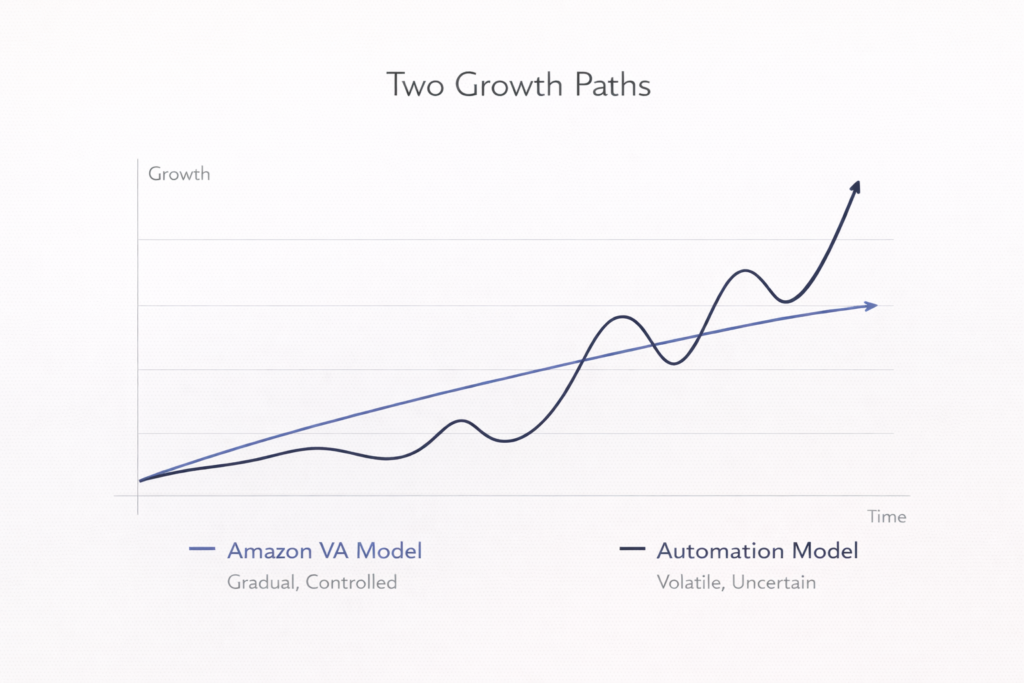
If you’re just starting, most experienced sellers will give you the same advice:
Start with control.
When you:
- Understand how Amazon works
- Learn from real performance data
- Build your own systems
You reduce risk and set yourself up for better long-term success.
Can You Use Both Together? (A More Advanced Approach)
Yes, and combining both approaches is often the most effective way to scale your Amazon business.
How the Hybrid Model Works in Practice
Instead of choosing between control and convenience, you combine them.
You use:
- A VA to manage daily operations
- Automation tools to improve efficiency
For example:
- Your VA handles listings, orders, and customer communication
- Tools manage pricing updates, analytics, and reporting
This creates a balanced system.
Why This Approach Works Better
Because it avoids the extremes.
- Fully manual systems can slow you down
- Fully automated systems can increase risk
A hybrid approach gives you:
- Control over decisions
- Speed through systems
- Flexibility to adapt
That’s why many experienced sellers in the US don’t rely on just one model; they combine both.
Common Mistakes to Avoid
Most sellers don’t fail because they don’t try; they fail because they make the wrong decisions early on.
Believing in “Passive Income” Without Understanding the Business
Amazon is not passive.
Even with automation, you’ll still need:
- Oversight
- Strategy
- Decision-making
Treat it like a business, not a shortcut.
Hiring Without Proper Evaluation
Whether you’re hiring a VA or choosing an automation agency, quality matters.
A poor decision here can lead to:
- Inefficiency
- Poor performance
- Financial loss
Take the time to evaluate properly.
Trusting Without Verifying
Especially with automation services, always verify:
- Case studies
- Real performance data
- Client feedback
Don’t rely on marketing promises alone.
Expecting Quick Results
Amazon takes time.
Most stores need:
3 to 6 months to stabilize, optimize, and grow
Understanding this upfront helps you stay consistent and avoid frustration.
Final Verdict: What Should You Choose?
For most people, the better choice comes down to how much control you want and how much risk you’re willing to take.
An Amazon Virtual Assistant gives you control, lower financial risk, and a clearer path to long-term growth. You stay involved, you understand what’s working, and you build a business step by step.
On the other hand, an Amazon Automation Service offers convenience and reduced involvement, but it comes with a higher upfront investment and greater dependency on execution. You’re trusting someone else to run the business, which can work, but only if everything is done right.
A simple way to think about it is this:
If you want to learn, stay in control, and grow steadily, a VA is the better fit. If your priority is to stay hands-off and you’re comfortable taking on higher financial risk, automation may be worth considering.
If you’re serious about building a profitable Amazon business with the right foundation, now is the time to hire an Amazon Virtual Assistant and start scaling with clarity and control.
1. What does an Amazon Virtual Assistant do?
An Amazon Virtual Assistant manages daily Amazon store tasks such as product listings, keyword research, customer support, inventory tracking, and basic PPC support. They help sellers handle operations efficiently while the business owner focuses on strategy, product selection, and overall growth.
2. Is Amazon automation really passive income?
Amazon automation is not truly passive income. While agencies handle operations, sellers still need to monitor performance, review reports, and make key decisions. Most successful stores require ongoing involvement to maintain profitability and avoid operational or account-related issues.
3. How much does an Amazon Virtual Assistant cost in the US?
The cost of an Amazon Virtual Assistant in the US typically ranges from $200 to $1,500 per month. Pricing depends on experience, skill level, and working hours, with offshore VAs being more affordable and US-based VAs charging higher rates.
4. How much does an Amazon automation service cost?
Amazon automation services usually cost between $5,000 and $30,000 upfront, with additional expenses for inventory, ads, and management. The total investment can reach $12,000 to $50,000 or more, depending on the scale and strategy of the business.
5. Which is better for beginners: Amazon VA or automation?
For beginners, an Amazon Virtual Assistant is usually the better option because it offers lower risk, more control, and learning opportunities. Automation services require higher upfront investment and carry more risk, making them less suitable for first-time sellers.