


Introduction
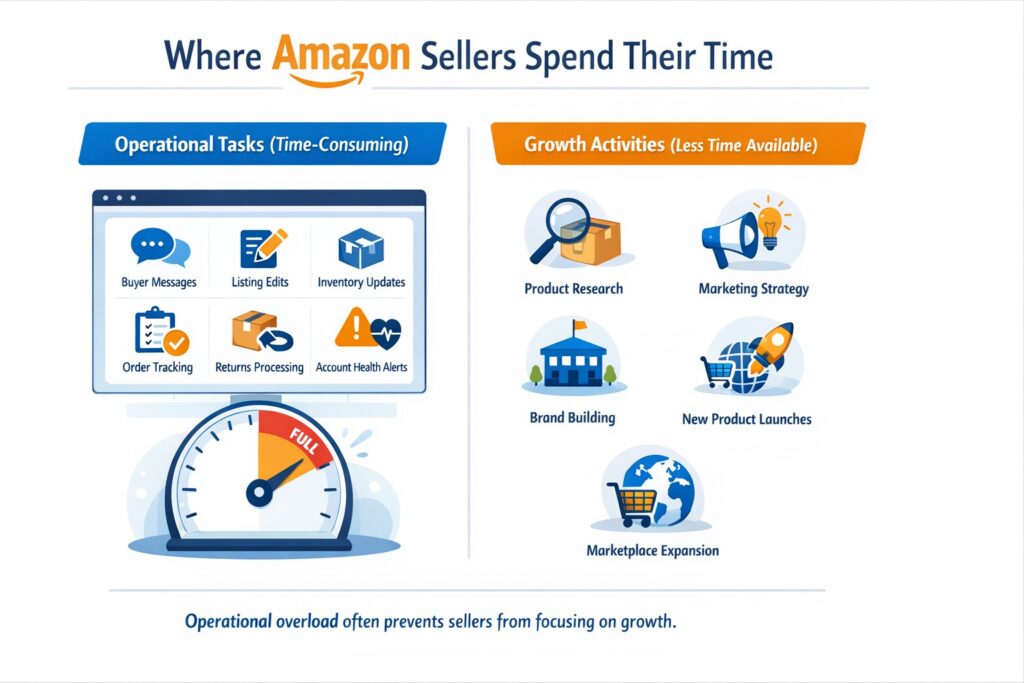
Amazon sellers often start by managing everything themselves. Listing products, responding to customers, monitoring account health, updating inventory, and tracking orders.
But as sales increase, so does operational complexity.
What begins as a manageable workflow quickly turns into a constant stream of tasks that pull attention away from marketing, product sourcing, and growth strategy.
Industry estimates suggest that Amazon sellers spend 30–50 percent of their time on operational tasks instead of revenue-generating activities.
This is why many growing sellers eventually decide to hire an Amazon virtual assistant.
An experienced Amazon ecommerce virtual assistant can handle daily operational tasks, maintain listing accuracy, improve response times, and help sellers scale without expanding internal teams.
In this guide, we will break down:
-
The real cost of hiring an Amazon virtual assistant
-
The essential skills every Amazon VA should have
-
A practical hiring checklist for store owners
Key Takeaways:
- Amazon sellers have a lot of time spent on operational activities, hence not focusing on business growth.
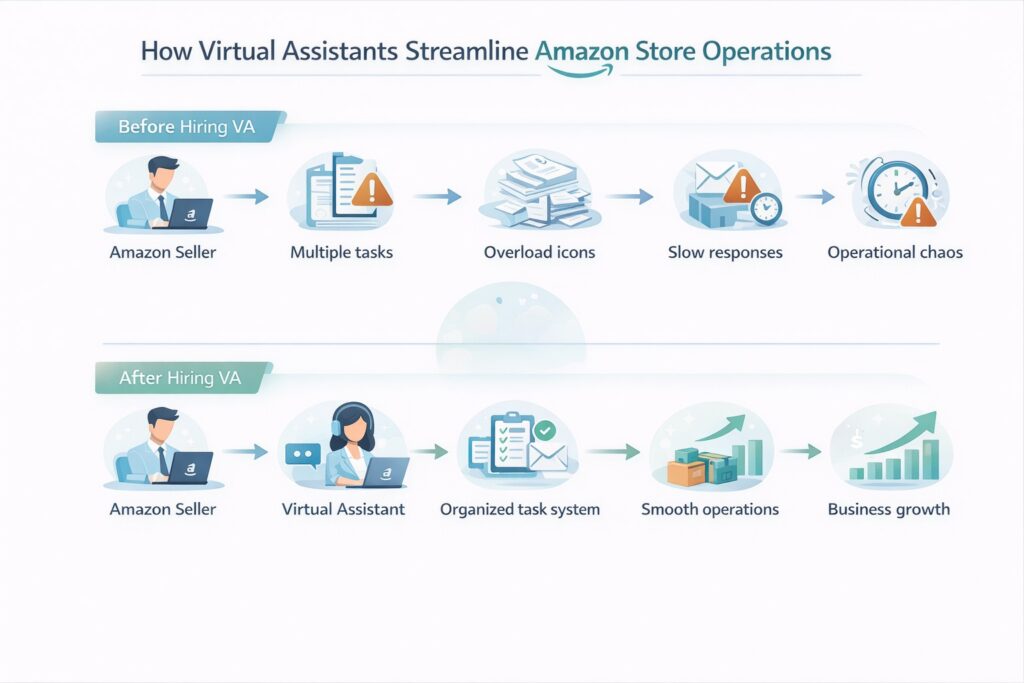
- An Amazon VA can be hired to help with various activities such as listings, customer service, orders, and account management.
- The use of specialized support helps in reducing operational errors.
- The cost of hiring an Amazon virtual assistant is less compared to hiring in-house staff.
- Having a hiring checklist helps in finding the right support for your Amazon store.
What Is an Amazon Virtual Assistant?
An Amazon virtual assistant is an individual who operates remotely to assist with the management of day-to-day operations from Amazon Seller Central.
This means that instead of you having to do everything yourself, you hire someone who has knowledge about how Amazon operates to help with certain aspects of the business.
They are trained to assist with operations such as product listing, order tracking, customer communication, inventory management, and account management.
The main difference between an Amazon virtual assistant and any virtual assistant is the knowledge they have about Amazon’s operations. Amazon has very strict rules, performance criteria, and operational procedures. An Amazon virtual assistant has knowledge about how to work with Amazon without getting their account suspended.
If you want to know more about the role of virtual assistants in general and how they can help an online store grow, you can check out our detailed guide on what an ecommerce virtual assistant is and how they can help online stores grow.
This will help you understand the role well enough to delegate effectively.
Why Amazon Sellers Are Hiring Virtual Assistants
Running an Amazon store today involves far more than simply listing products.
Competition has increased. Customer expectations are higher. Amazon’s marketplace rules are stricter than ever.
As stores scale, operational pressure builds quickly.
For many sellers, hiring support becomes less of a luxury and more of a necessity.
1. Operational workload increases as sales grow
Every order triggers multiple backend tasks. Payment confirmation, shipping coordination, customer notifications, tracking updates, and potential returns.
A store processing 10 orders a day operates very differently from one processing 100.
Without support, founders become trapped in daily operations.
2. Customer experience affects store performance
Amazon closely tracks seller performance metrics.
Slow response times, unresolved buyer messages, or delayed order updates can impact account health and visibility.
Having someone consistently monitoring communication ensures customers receive fast responses and your store maintains strong performance metrics.
3. Scaling requires operational systems
Most successful Amazon stores operate with structured processes.
Tasks are organized. Listings are updated consistently. Inventory is monitored. Customer support is handled quickly.
An Amazon virtual assistant helps build and maintain these systems.
What Tasks Can an Amazon Virtual Assistant Handle?
Many sellers don’t realize how many tasks there are to delegate until they start writing them down.
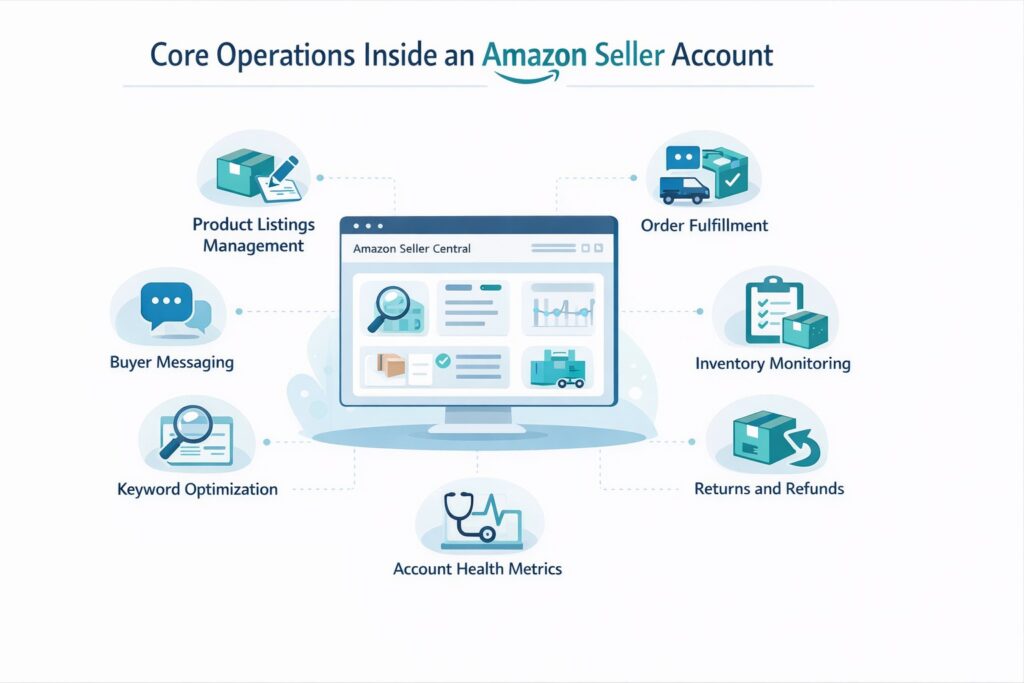
1. Product listing creation and updates
Your virtual assistant can add new product listings, update the text, and adjust images to ensure the accuracy of your Amazon listings.
2. Keyword research and listing optimization
Experienced Amazon virtual assistants can also update your listing’s keyword and structure for better search results.
3. Customer support and buyer messaging
Answering buyer messages promptly is important for Amazon sellers. Your virtual assistant can handle these for you.
4. Order management and tracking
Your virtual assistant can also keep an eye on your orders, check the status of your shipments, and ensure the order fulfillment process is going smoothly.
5. Inventory monitoring
Running out of stock negatively impacts your sales and ranking. Your virtual assistant can keep your stock levels monitored and inform you when it’s time to replenish your stock.
6. Account health monitoring
Amazon stores operate within strict performance metrics. Your virtual assistant can keep your account metrics monitored.
Want to know more about the tasks you can delegate to your virtual assistant? Check out our guide to the Top Tasks You Should Outsource to an E-commerce Virtual Assistant.
Delegating the right tasks is what allows Amazon sellers to scale without burning out.
Cost of Hiring an Amazon Virtual Assistant
One of the most common questions sellers ask is about cost.
The good news is that hiring a virtual assistant is usually far more affordable than hiring in-house staff.
| Type of Amazon VA Support | Typical Cost Range | Best For |
| Entry-level Amazon virtual assistant | $5 – $10 per hour | Basic tasks like order tracking and simple listing updates |
| Experienced Amazon ecommerce virtual assistant | $10 – $20 per hour | Listing optimization, customer support, and inventory monitoring |
| Specialized Amazon virtual assistant | $20 – $35 per hour | Advanced tasks like keyword research and competitor analysis |
| Dedicated monthly Amazon VA support | $400 – $1500 per month | Full store operations and ongoing marketplace management |
1.Hourly rates
Amazon virtual assistants typically charge based on experience, skill level, and workload.
Rates often vary depending on the complexity of tasks and the assistant’s expertise with Amazon Seller Central.
2. Monthly support models
Some businesses choose ongoing monthly support where assistants manage store operations consistently throughout the week.
This approach provides stability and ensures operational tasks are always handled.
3. Comparing cost to hiring employees
Hiring in-house employees in the United States involves salaries, benefits, workspace, training, and management overhead.
Virtual assistants offer flexibility. You pay only for the support you need while gaining access to specialized expertise.
If you find yourself spending more time managing listings and responding to customer messages than planning your next product launch, it may be time to consider hiring an Amazon ecommerce virtual assistant to support your store operations.
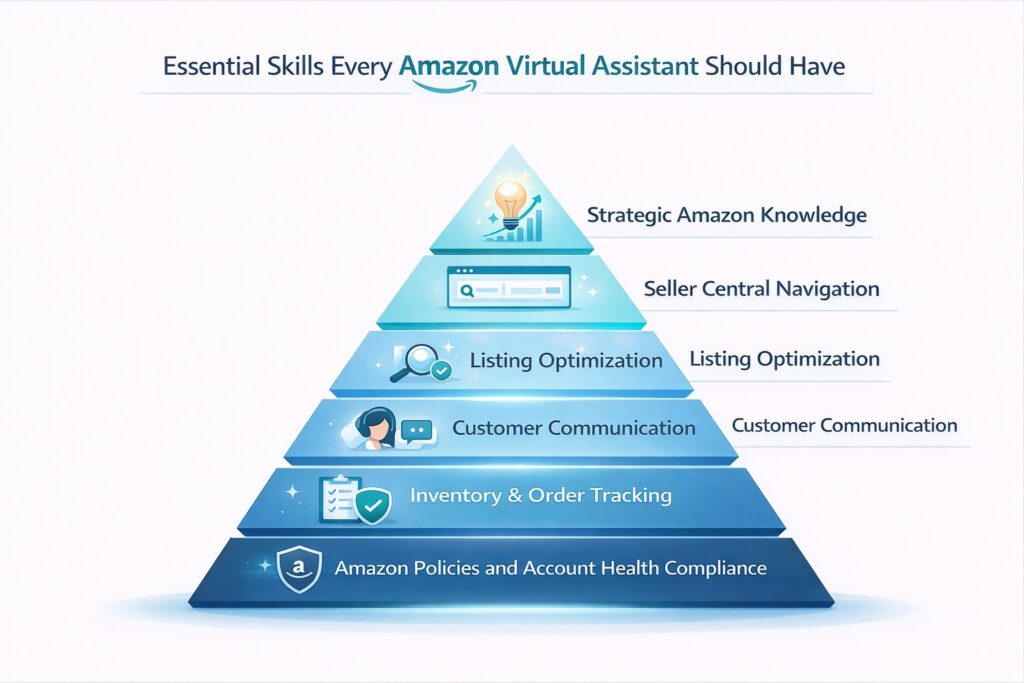
Essential Skills to Look for in an Amazon Virtual Assistant
Not all virtual assistants have Amazon experience. When hiring support, it is important to focus on specific skills that matter for marketplace operations.
1. Seller Central expertise
The assistant should understand how to navigate Amazon Seller Central and perform operational tasks confidently.
2. Listing optimization knowledge
Strong assistants understand how product listings should be structured for both customers and search visibility.
3. Customer communication skills
Handling buyer messages professionally protects your brand reputation and prevents disputes.
4. Inventory and order management
Assistants should be able to track orders, monitor inventory, and maintain operational accuracy.
5. Understanding Amazon policies
Amazon frequently updates its marketplace rules. Your assistant should know how to work within these policies safely.
Amazon Virtual Assistant Hiring Checklist
Before hiring support, use this checklist to ensure you choose the right assistant for your business.
- Experience working with Amazon Seller Central
- Understanding of product listing structure and optimization
- Familiarity with Amazon policies and performance metrics
- Ability to manage customer communication professionally
- Clear reporting and communication process
- Experience supporting ecommerce businesses
- Ability to work within structured workflows
Using a checklist prevents rushed hiring decisions and ensures your assistant can truly support your operations.
Many growing e-commerce brands eventually realize that scaling Amazon sales requires operational support. Working with trained e-commerce assistants can help sellers build reliable systems while focusing on strategy and growth. Crew27 supports online stores with specialists who understand marketplace operations and day-to-day store management.
When Should You Hire an Amazon Virtual Assistant?
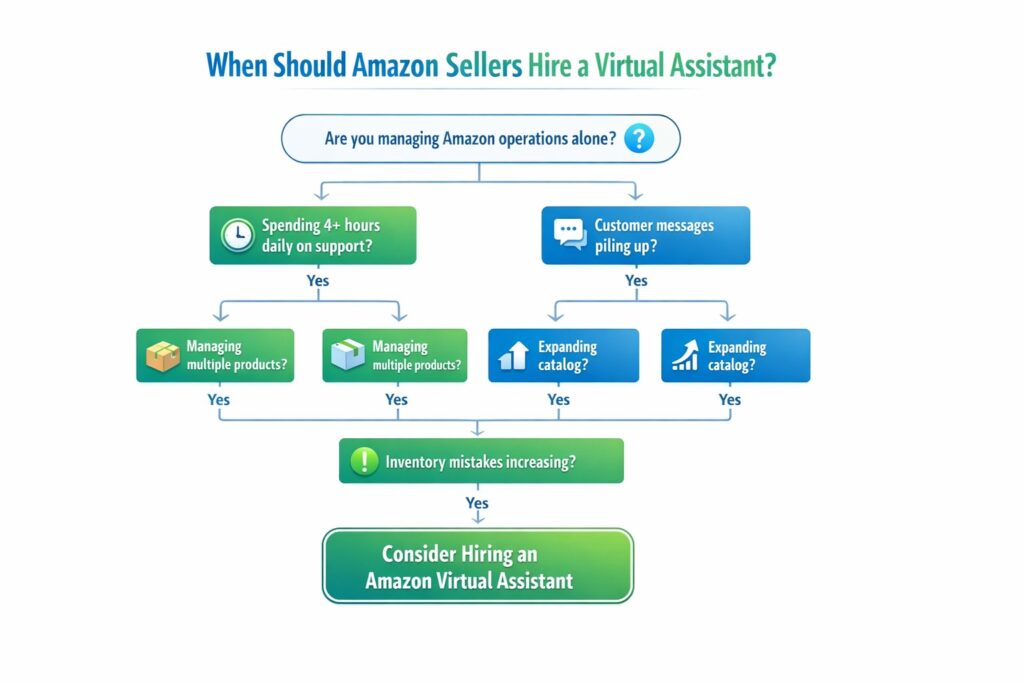
Timing matters when bringing in support.
Some signs that it may be time include:
- Customer messages are taking too long to answer.
- Listings are not being updated regularly.
- Inventory errors are becoming more frequent.
- You are expanding your product catalog.
- You are managing multiple marketplaces.
When these issues appear consistently, hiring support becomes a growth decision rather than an expense.
Common Mistakes Sellers Make When Hiring a Virtual Assistant
Many hiring challenges come from unclear expectations.
Here are common mistakes to avoid.
Hiring a general assistant without Amazon experience.
Not defining tasks clearly before on-boarding.
Expecting strategy instead of operational execution.
Failing to document workflows and processes.
Clear communication and structured on-boarding help assistants integrate smoothly.
Final Thoughts
Scaling an Amazon store requires more than great products.
It requires consistent operations, responsive customer service, accurate listings, and organized systems behind the scenes.
Trying to manage every task alone eventually slows growth.
Hiring an Amazon virtual assistant allows sellers to step back from daily operational pressure and focus on what truly drives business expansion.
When operational support is handled by trained specialists, store owners gain the time and clarity needed to grow their brand, launch new products, and explore new opportunities.
And that shift can make all the difference between running a store and building a scalable e-commerce business.
What does an Amazon virtual assistant do?
An Amazon VA manages daily store operations such as product listing updates, customer messages, order tracking, inventory monitoring, and account health checks inside Amazon Seller Central. Their role is to reduce operational workload so sellers can focus on product sourcing, marketing, and scaling the business.
How much does it cost to hire a virtual assistant for Amazon?
The cost of hiring an Amazon virtual assistant varies depending on experience and task complexity. Many sellers choose hourly or monthly support models. Virtual assistants are generally more affordable than hiring in house staff while still providing specialized marketplace support.
When should Amazon sellers hire a virtual assistant?
Amazon sellers should hire a virtual assistant when daily operational tasks start consuming too much time. Signs include delayed customer responses, frequent listing updates, inventory management challenges, or managing multiple products and marketplaces at the same time.
What skills should an Amazon virtual assistant have?
A skilled Amazon virtual assistant should understand Amazon Seller Central, product listing optimization, keyword research, customer communication, inventory tracking, and marketplace policies. These skills help maintain store performance while ensuring smooth daily operations.
Can an Amazon virtual assistant manage product listings?
Yes. An Amazon ecommerce virtual assistant can create, update, and optimize product listings. They can upload images, edit descriptions, update keywords, monitor listing accuracy, and ensure product information remains consistent across the Amazon marketplace.