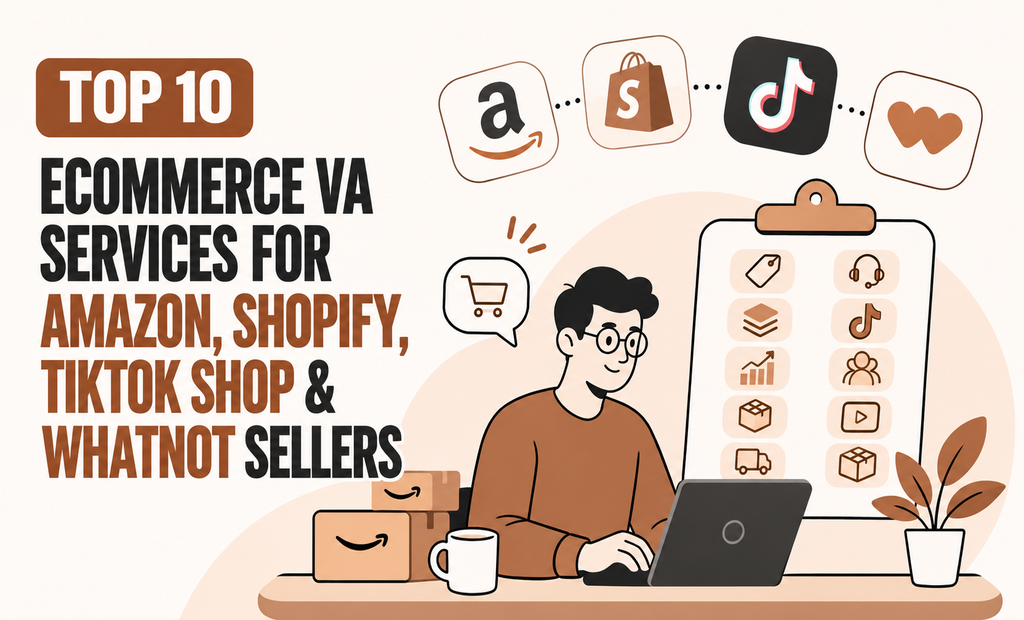

Quick Answer: The ecommerce VA services that return the most founder time are listing and catalog work, Amazon PPC, inventory and order handling, customer support, TikTok Shop operations, and Whatnot show support. Start with support and orders. They carry the highest volume and need the least judgment from you.
Most founders keep tasks because they can’t tell which ones actually need them. The test is simple: if a task follows written rules and repeats every week, a trained VA can own it. Pricing, brand voice, supplier negotiations, and final refund exceptions stay with you. The ten services below fall on the delegable side of that line.
1. Product Listing Management Across Ecommerce Platforms
Titles, bullets, descriptions, images, variants, and price changes consume hours because every channel wants them formatted differently. Amazon product listing services cover parent-child variations, backend keywords, and A+ content support. Shopify and TikTok Shop follow the same pattern with different fields. Give the VA one master spreadsheet, and they publish to each channel from it instead of rebuilding every listing by hand. Ask the VA to log each change in a shared sheet so you can trace any edit that affects sales.
2. Product Catalog Management
As the catalog grows, errors pile up: mismatched titles across channels, stale specs, and discontinued items still live. Product catalog management is the scheduled audit that catches them. The VA corrects tags, categories, and variant data, then keeps Amazon, Shopify, and TikTok Shop consistent with one another. Run it monthly at first, then quarterly once the data is clean.
3. Amazon PPC Management
Bid adjustments, search term harvesting, negative keywords, and weekly reports are rule-based work. Amazon PPC management run by a VA follows the targets you set: ACOS ceiling, daily budget, and priority products. You own the strategy; the VA executes against it and reports back. Ask for a sample report before you sign, and confirm they have worked in your product category.
4. Inventory Tracking and Stock Sync
Shopify inventory tracking gets complicated once stock sells on several channels at once. The VA reconciles counts against supplier and warehouse data, updates quantities after every shipment, and flags SKUs nearing reorder point. On Amazon, the same VA can build shipment plans, a multi-step task most sellers avoid. Overselling is among the most common problems for live sellers, so accurate counts matter most where sales move fastest.
5. Order Processing and Shipment Tracking
Ecommerce order processing means reviewing new orders, confirming addresses, passing them to fulfillment, and sending tracking numbers. On TikTok Shop, orders pile up and tracking updates slip when nobody owns the queue. Assign the queue to one VA with a daily checklist and a ship-by deadline. Orders from live shows and promotions arrive in bursts, so the checklist should name a daily cut-off time.
6. Customer Support, Returns, and Refunds
Ecommerce customer service outsourcing is usually the first handoff because it carries the highest ticket volume. The VA works from your saved replies: where-is-my-order answers, return labels, cancellations, and standard refunds. Set a same-day target for the first reply, and have the VA flag every ticket that mentions a chargeback or a platform dispute. Anything outside your written policy comes to you. Routine tickets leave your inbox, and the exceptions stay yours.
7. TikTok Shop Operations
Daily Seller Center work covers listings, order handling, promotions, and shop health scorecards. Job postings for these roles ask for hands-on Seller Center experience, not general social media or support skills. Whether you hire a TikTok Shop management agency or a dedicated VA, confirm that experience before onboarding. Any provider of TikTok Shop management services should be able to name the scorecard metrics they monitor.
8. TikTok Affiliate and Sample Coordination
Creators drive sales on TikTok Shop, and the admin around them never stops: outreach, sample shipments, campaign timelines, and deliverable tracking. Employers split this into its own role, separate from shop operations. The VA logs every creator conversation and chases late content, so affiliate outreach doesn’t stall during busy weeks.
9. Whatnot Show Preparation and Live Chat Support
Whatnot live selling puts pressure on preparation. The VA builds the show rundown, pre-lists inventory in the order you will sell it, and sets up the packing station. During the show they moderate chat and answer shipping and bundling questions, so you stay on camera. Whatnot seller tools like Seller Hub handle scheduling and order exports; the VA runs them.
10. Whatnot Post-Show Fulfillment
Sold items should be reconciled against inventory within 24 hours of a show, with tracking numbers sent to buyers. Late shipping hurts seller metrics. The VA exports orders, prints labels, uploads tracking, and logs buyer issues for your review. Open issues go into a shared log, so disputes get resolved from a record instead of memory.
Where to Start
Hand off in this order: support and order processing first, then listings and catalog work, then ads and platform-specific tasks. Plan for an initial two weeks of structured onboarding, with daily check-ins, documented workflows, and time set aside to review your VA’s work before handing over tasks independently. Grant access through each platform’s user permissions, scoped to assigned responsibilities, and review permissions regularly. Never share admin credentials. A weekly summary of orders, ticket volume, and ad spend tells you whether each handoff is working. If you are still weighing a managed team against a freelancer, our comparison of e-commerce VA agencies and freelancers covers cost, backup coverage, and training time. Crew27 supplies trained ecommerce VAs on flexible monthly plans with no long-term contracts.