

Running an online store today means being five people at once.
You are the merchandiser uploading new products before a launch. The marketer writing tonight’s email campaign. The support rep replying to someone asking where their order is. The media buyer is checking whether yesterday’s ad spend actually turned into sales. And somewhere in between all of that, you are supposed to be the founder thinking about where the business goes next.
Most days, that last part gets pushed to tomorrow. Then tomorrow becomes next week.
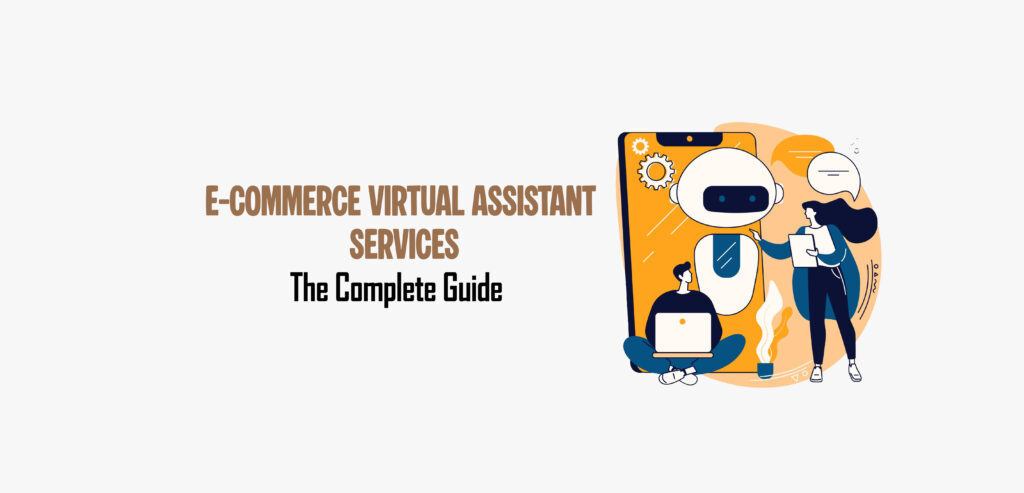
This is exactly the gap an e-commerce virtual assistant is built to close.
Quick Answer: An e-commerce virtual assistant is a trained remote specialist who manages the day-to-day work of running an online store. That includes product uploads, customer support, email and SMS marketing, paid ad management, and SEO. Unlike a general virtual assistant, an e-commerce VA already knows platforms like Shopify, Amazon, Klaviyo, and Meta Ads Manager, so there is no long onboarding before they become genuinely useful.
This guide walks through everything an ecommerce VA can take off your plate, what each service actually involves, the real difference between a dedicated and hourly VA, what this costs in 2026, and how to figure out where to start.
Why More Stores Are Turning to Virtual Assistants Right Now
Global retail ecommerce is on track to hit $6.88 trillion in 2026. Behind nearly every store that is actually performing well, there is an operations layer handling listings, orders, customer tickets, and catalogue updates every single day. For most growing brands, that layer is no longer something they built in-house. It is outsourced.
Five years ago, hiring a VA usually meant general admin help. Sorting an inbox. Managing a calendar. Basic data entry. E-commerce changed that completely. Stores now need someone who understands what a SKU is, how Klaviyo flows actually work, what ROAS means in practice, and how to navigate Shopify’s backend without being walked through it.
The brands scaling fastest right now are not the ones where the founder is doing everything personally and just working harder. They are the ones where the repeatable, platform-specific work has been handed to someone trained to do it properly.
So what does that actually look like in practice? Let’s go through it function by function.
The Six Things an E-commerce Virtual Assistant Actually Does
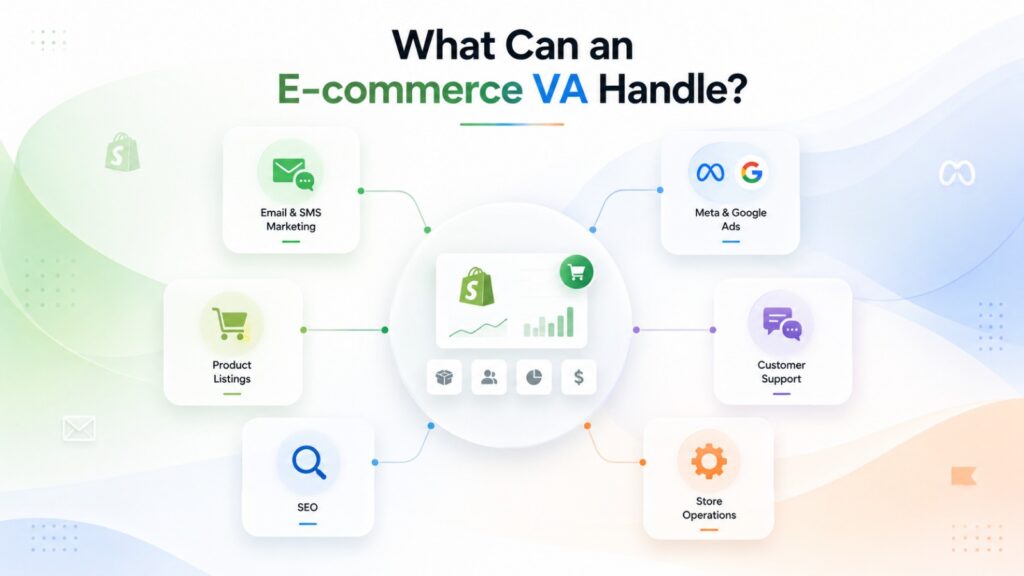
1. Email and SMS Marketing
Email is still the single highest return marketing channel in e-commerce. On average, it returns $36 to $72 for every dollar spent, and that gap exists because most stores are not running their email program properly, not because the channel stopped working.
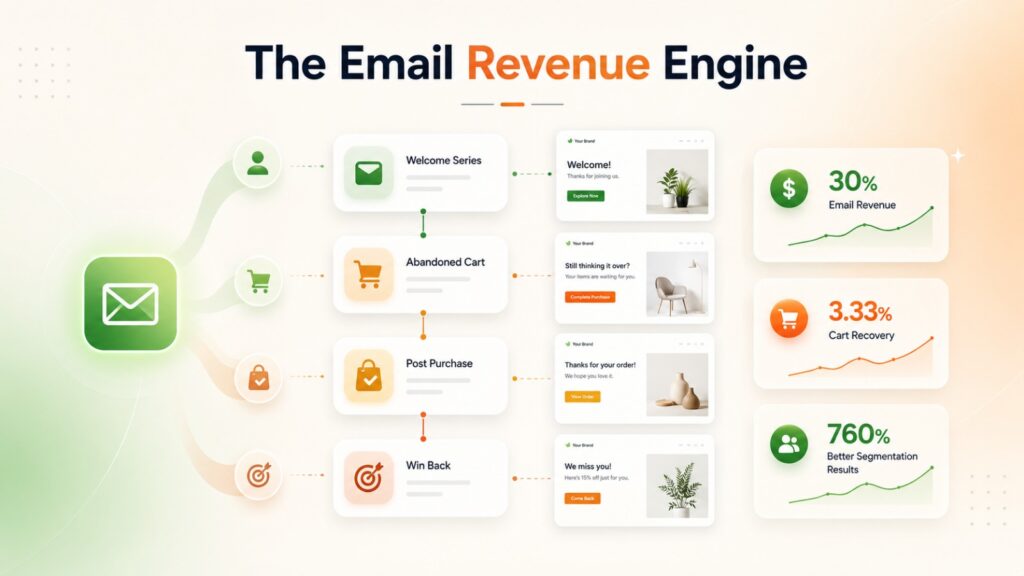
A trained VA handles this for you daily. That means building and maintaining your core automated flows, the welcome series, abandoned cart, browse abandonment, post purchase, and win back sequences. It also means scheduling promotional campaigns, keeping your subscriber list clean through segmentation, planning seasonal and festival campaigns like Black Friday, and sending you a clear weekly report so you know what is actually working without opening Klaviyo yourself.
Here is the number that explains why this matters so much. Automated flows make up just 2 per cent of all email sends but drive 30 per cent of total email revenue. Abandoned cart flows alone convert at an average of 3.33 per cent, and top-performing brands push that to 7.69 per cent. Segmented campaigns generate 760 per cent more revenue than ones sent to your whole list at once.
A well-run Klaviyo account should see flows making up 50 to 60 per cent of total email revenue. If yours is sitting under 30 per cent, that is usually a sign that campaigns are not going out consistently, or your flows were set up once and forgotten. This is the exact gap an Email and SMS Marketing VA is built to close. [Source: Ringly.io’s 2026 Ecommerce Email Marketing Statistics and Darkroom]
2. Meta and Google Ads Management
Running profitable ads is not a once-a-week task. It needs daily attention, and that is precisely what most store owners cannot give it on top of everything else.
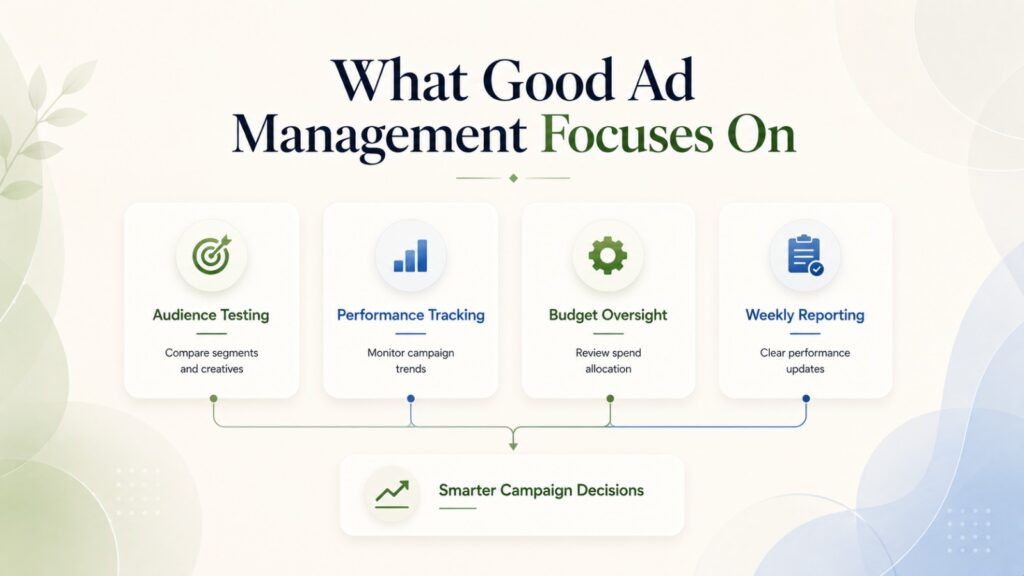
A VA handling your ads checks ROAS, CTR, and spend pacing every single day. They adjust bids, pause campaigns that are bleeding money, and push the budget toward what is actually converting. They run A and B tests and track the results properly instead of guessing. And every week, you get a clean report you can actually read in ten minutes.
The reason this matters so much is simple. Campaigns left untouched lose performance over time as audiences get tired of seeing the same ad and costs creep up. A VA catching that early is the difference between an account that quietly drains your budget and one that keeps compounding.
If ad spend is the area eating your time right now, our Google PPC VA and Facebook Ad VA teams are trained specifically for this.
3. Product Uploading and Listing Management
Product uploading is one of the most time-consuming jobs in e-commerce, and also one of the easiest to fully hand off without losing any quality.
This covers writing titles, descriptions, and bullet points that are actually optimised for search. Uploading and properly sizing product images with alt text. Creating variants for size or colour. Entering SKUs and inventory counts correctly. Sorting products into the right collections. And keeping inventory levels accurate so you never oversell or run out of your best seller without warning.
A messy or poorly written product page does not just look unprofessional. It directly hurts your conversion rate and how well that page ranks. Our Product Uploading VA service exists specifically to keep this running cleanly in the background.
4. Customer Support and Order Management
Most of the questions hitting your inbox right now are not unique. They are the same handful of questions, asked in slightly different words, over and over again.
A trained support VA handles order tracking questions, returns, refunds, pre-sale product questions, and general inbox management, all inside your existing tools. They escalate to you only when something genuinely needs your judgment.
This connects directly to revenue, not just your time. Customers are far more likely to come back and buy again when support replies quickly and consistently. Slow replies do not just upset one person. They turn into reviews that every future visitor reads before deciding whether to trust your store. If this sounds like exactly what your mornings look like, this breakdown of why Shopify owners drown in support emails goes deeper into the fix. Our Customer Support VA team handles exactly this, day in and day out.
5. E-commerce SEO
SEO for an online store is different from blog SEO. It is about product pages, collection pages, and the technical stuff that decides whether Google and AI search engines actually show your store to people searching.
This includes keyword research for your products and collections, writing proper title tags and meta descriptions, structuring your collection pages and internal links sensibly, and fixing technical issues like slow load times or broken links that quietly hurt your rankings.
Most store owners treat SEO as something you set up once and walk away from. But your catalogue keeps changing, new products launch, and search behaviour shifts constantly. Treating SEO as an ongoing job rather than a one-time project is what actually keeps organic traffic growing instead of flatlining.
6. General Store Operations
Beyond the five areas above, a dedicated VA often becomes the backbone of your daily operations. Check your Shopify admin every day. Setting up and testing discount codes. Coordinating product launches across listings, email, and ads at the same time so everything goes live together. Watching what competitors are doing. And pulling together one clean report each week instead of you checking five different dashboards yourself.
Dedicated VA or Hourly VA: Which One Fits Your Store
This is one of the most common questions store owners ask once they decide they need help. Here is the honest answer.
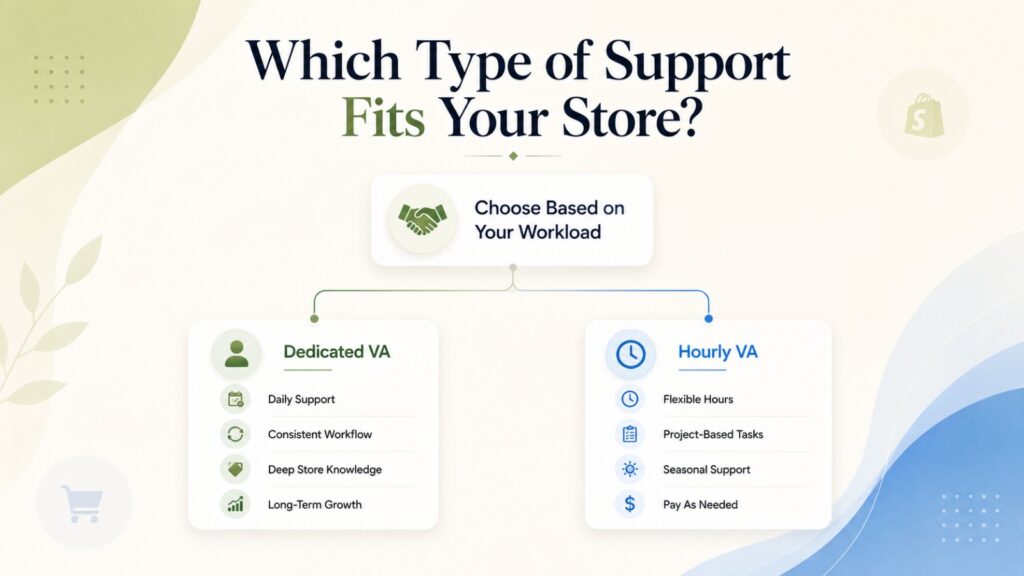
A dedicated VA is allocated solely to your online business and works strictly defined hours per day, normally 8 hours. This type of virtual assistance is ideal for businesses that have ongoing needs on a regular basis. The fact that the same individual works with you every day helps him/her understand your business and makes your work predictable and dependable.
An hourly VA offers flexible services, customised as per your needs. This type of service is ideal for small companies or when you require assistance for a special project during a particular month, such as holidays or launching new products.
| Factor | Dedicated VA | Hourly VA |
| Coverage | Full-time, around 8 hours a day | Flexible, based on what you need |
| Best for | Growing brands need multiple functions covered | Smaller stores or specific projects |
| Predictability | High, consistent daily routine | Variable, scales with workload |
| Cost | Fixed monthly retainer | Pay only for hours used |
| Store knowledge | Deep, builds over time | Task focused |
If you want full coverage with someone who knows your store inside out, explore our Dedicated VA option, or check out our packages to compare what fits.
What a VA Costs vs What It Actually Saves You
The hourly rate is the easy number to look at. The harder number is what hiring someone in-house would actually cost, once you add salary, taxes, benefits, recruitment, and the months it takes a new hire to get up to speed.
A full-time in-house ecommerce hire in the US typically costs $66,000 to $94,000 a year once everything is factored in. A dedicated ecommerce VA covering the same ground in product management, support, and marketing execution usually costs $18,000 to $36,000 a year. The output is comparable. The cost is not.
To be fair, a VA is not meant to replace the strategic, brand-defining decisions only you can make. It is meant to take the repeatable, execution heavy work off your plate so you actually have time to focus on those decisions instead of drowning in the daily grind.
Why Brands Choose Crew27 Marketing
Hiring an e-commerce VA only works if the person you bring on actually understands e-commerce from the first day. A general admin VA usually needs months of training before they are genuinely useful on Shopify, Klaviyo, or Meta Ads Manager. That training time, and the mistakes that come with it, is exactly what working with a specialised team removes.
Our VAs already know Shopify, customer support workflows, email marketing platforms, paid advertising, SEO basics, and day-to-day store operations before they ever touch your account. There is no lengthy ramp-up period.
We also make it easy to scale. Need support across marketing, operations, and customer service all at once? You can simply add another trained VA as your business grows, without rebuilding how your team works from scratch.
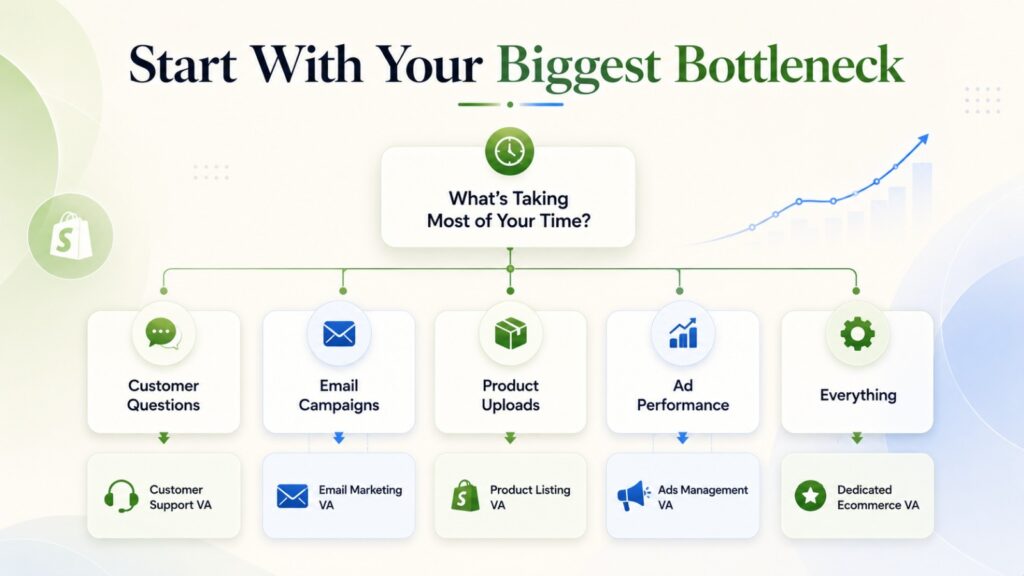
Not Sure Where to Start? Here’s a Simple Way to Decide
You do not need all six services running at once. The smartest move is figuring out your single biggest operational drain right now and starting there.
If your inbox is constantly behind and customers are waiting hours for a reply, start with Customer Support VA help.
If you have a backlog of unlisted products or your listings just are not optimised, start with Product Uploading VA support.
If your Klaviyo account has flows you built once and never touched again, start with Email and SMS Marketing VA help.
If your ad spend feels like it disappears with no clear payoff, start with Google PPC or Facebook Ad VA support.
And if you need broad coverage because you are simply stretched too thin across everything, a Dedicated VA is usually the most efficient place to begin.
The Real Question Is Not Whether to Get Help
It is being honest about what is actually eating your time right now.
Maybe it is a support inbox you cannot keep up with. Maybe it is a Klaviyo account collecting dust. Maybe it is an ad account that feels like it is spending money without showing you why. Whatever it is, there is a service built specifically to take it off your hands so you can focus on the parts of the business that actually need you.
If you want to figure out exactly where to start, book a free consultation with Crew27, and we will help you map it out together.
We have worked across a wide range of industries too, including supplements, fashion, beauty, health and wellness, home and living, and lifestyle brands. That range means the patterns we see in one industry often help us make smarter calls in another. And we have supported e-commerce businesses across the United States, the United Kingdom, and Australia, adapting to different time zones and customer expectations along the way.
1. What does an e-commerce virtual assistant do?
An e-commerce virtual assistant handles the daily operational and marketing work that keeps a store running. This includes product uploads, customer support, email and SMS marketing, paid ad management, and SEO. Unlike a general VA, they are trained on platforms like Shopify, Klaviyo, and Meta Ads Manager from day one, so there is barely any onboarding needed.
2. How much does a Shopify virtual assistant cost?
Pricing in 2026 usually falls between $8 and $35 an hour, depending on experience and platform skill. A dedicated full-time ecommerce VA typically costs $1,500 to $3,000 a month. That compares well against the $66,000 to $94,000 a year it costs to hire someone in-house once salary, taxes, and benefits are all factored in.
3. What is the difference between a dedicated and hourly ecommerce VA?
A dedicated VA works exclusively on your store for a fixed block of hours every day, usually 8, and offers predictable, consistent support. An hourly VA gives you flexible support that scales up or down based on your actual workload. The right choice depends on your order volume and how many areas you need covered.
4. Can a virtual assistant manage email marketing campaigns?
Yes. A trained e-commerce VA can build and manage your Klaviyo flows, including welcome series, abandoned cart, post purchase, and win back sequences, plus schedule campaigns and report on performance. Since email returns $36 to $72 for every dollar spent, keeping it running consistently is one of the highest value things you can hand off.
5. Can an e-commerce VA run Meta and Google Ads?
Yes. A trained marketing VA can handle daily campaign monitoring, bid adjustments, budget pacing, testing, and weekly reporting across both Meta and Google Ads. Checking performance daily instead of weekly usually catches problems early, before they waste a meaningful chunk of your budget.
6. How quickly can I hire an e-commerce virtual assistant?
With a specialised provider, matching and onboarding usually take 24 to 72 hours since the VA already knows the relevant platforms before they start. Most clients see their VA fully productive on assigned tasks within the first week.